
Cricket Interviews
Former Lions Star Nono Pongolo Highlights Uncertainty of One-Year Contracts in SA Domestic Cricket

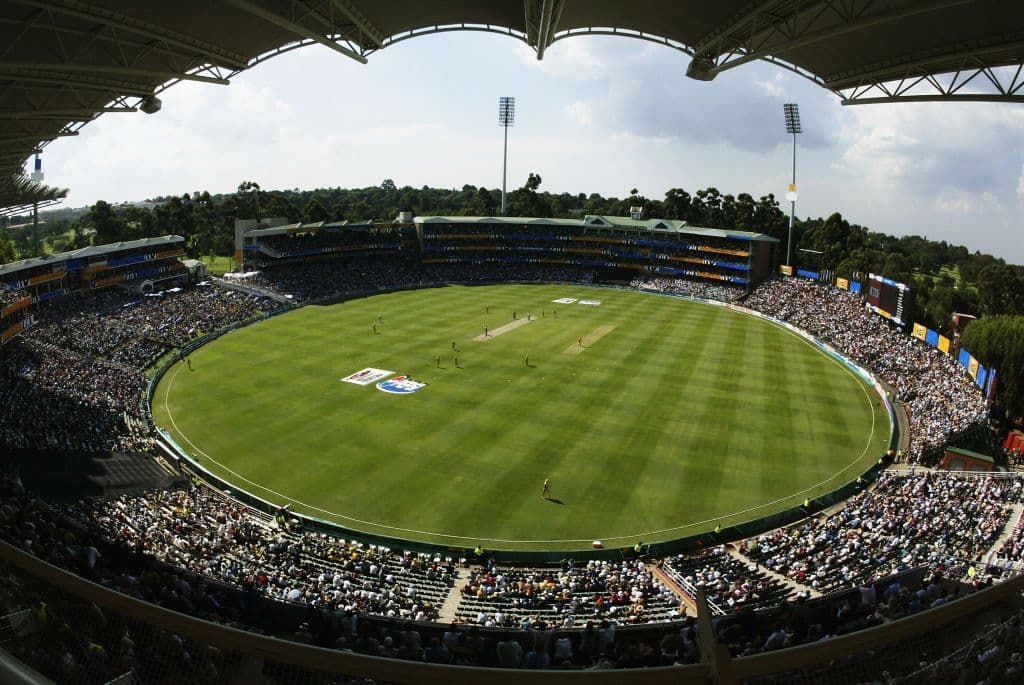
General view by Ian Walton | Getty Images
Former Lions cricketer, Nono Pongolo, pleads for clarity in the role of the domestic coaches around the country, reflects on his journey as a professional cricketer and how he dealt with having one-year contracts all his career.
One-Year Contracts
To this day, there are many domestic players in South Africa who walk around with a cloud of uncertainty hanging over their heads, wondering what the future holds for them, as they currently hold one-year contracts in their respective domestic teams.
In this day and age, domestic players still can not make any long-term commitments, such as taking up home and car loans, in order to better their lives and their families’ lives.
All because they simply do not have a secure future. Yes, not every player will have a multi-year deal; those should be earned. However, there are players in SA that go their entire careers without ever having a multi-year contract.
Pongolo, whose professional career spanned over an almost ten years, is such an example, having gone through almost all his career with one-year contracts.
In an exclusive interview with Sportsbom.co.za, Pongolo reflected on his journey as a professional cricketer in SA and how one-year contracts affected him on and off the field.
“For me, only when I was at North West that I ever had a two-year deal. It was tough because at the time the contracting period used to be around December-January, it's changed now to later in the season,” Pongolo told SportsBoom.co.za.
“It was tough from a personal point of view. I mean, looking after yourself, your life, it's very hard because you can't make plans. I mean, I come from the Western Cape, so you're basically going to spend a bit of time in rentals and making sure that you don't overcommit yourself because your life could change."
“I’ve been lucky enough because I’m not someone who spends like crazy. So, my lifestyle was not an issue off the field to have dealt with those things. You could have sudden changes in one's life when a contract is taken away. So, that's the difficulty. It affects a lot of players, considering that you could lose your contract.”
Coaches’ Roles
When many players have one-year contracts, it can be hard to focus on their dreams, which got them into the game in the first place, playing for South Africa.
Now, players find themselves playing to secure contracts, playing for numbers, instead of focusing on their development and their dreams of playing for South Africa someday.
It is not only the player that takes a hit because of one-year contracts, but also the sport in the country, because some of the players, if afforded the investment, could make it to the highest level and do great things for South African cricket.
Pongolo highlights that the solution starts in defining what the coaches’ roles are: playing to win trophies or producing players for the national team?
“When it comes to solutions, I always ask what the role of a domestic coach is? I think it's always a great starting point for me to say what the role of a domestic coach is. Are domestic coaches there to produce players for the Proteas or to win trophies?” Pongolo posed the question in an exclusive interview with SportsBoom.co.za.
“Because those two things, some teams can do those things in conjunction with winning and developing players. I think the role of domestic coaches for me is very important. The clarity of what we are here to do. What are we to do as a coaching staff over here to produce and develop players for South African cricket, and also be able to win trophies?"
“And then again, I think the system has gotten better when it comes to contracting. I think SACA has also done a really good job. I know some of the teams might sign a couple of players on a three-year deal. Some of the players will be on a two-year deal, and then possibly more than half will be on one-year contracts."
“There's something within the system now where coaches have to do PDPs, player development plans or a programme where, as a coach, you have to state what this player’s role is? What skill set do they need for each format? And how are you basically looking to help them become better?"
“You'll do one beginning of the season, one mid-season, to just track if everything is going well. If not, what measures can you put in place to help that player? And then at the end of the season, how the season went and what needs to be done for the future."
“So, that played an important part from a SACA point of view, ensuring that coaches don't just pick a player this season and then get rid of by the end of the season.”
With the new domestic structure, coaches also have to deal with promotion and relegation, a feat that may also push them to focus on the short term instead of the long term.
Related Resources to Cricket Interviews
- Sources Claim Quinton de Kock Has No Plans to Play Domestic Cricket Despite Proteas Return
- ‘Any Team Must Adapt’ – Alviro Petersen on Proteas’ Kolkata Collapse Against New Zealand
- Dale Steyn Backs Unbeaten Proteas to Bury ‘Chokers’ Tag and Win T20 Crown
- Exclusive: Tabraiz Shamsi Reveals the Brotherhood Fuelling Lungi Ngidi’s World Cup Comeback
- Exclusive: T20 World Cup "Title There for the Taking," says Proteas' Temba Bavuma
- Exclusive: Cricket SA Aim to Announce Full 2026/27 Summer Line-Up by Week’s End, White-Ball England Leg in Doubt
- Exclusive: Proteas Captain Markram’s Rich Form Gives South Africa a Real Shot at T20 Crown, says Paul Adams
- Today’s Clive Rice? Wiaan Mulder Delivers Lions’ Greatest All-Round Match
- Exclusive: Robin Peterson Backs Proteas’ T20 World Cup Chances and Hails Ryan Rickelton’s Form
- Exclusive: ‘It Would Not Surprise Me If They Go All the Way,’ Says Former Proteas All-Rounder Chris Morris
- Exclusive: Lhuan-dre Pretorius Responds to Proteas Snub the Only Way He Knows How
- Exclusive: Ryan Rickelton Credits 2024 World Cup Exposure for Calm, Clinical Start to 2026 Campaign
- Exclusive: Kwena Maphaka Beams With Pride Ahead of First Senior World Cup With Proteas
- Exclusive: Corbin Bosch Leans on 2014 U19 Success as He Prepares for Maiden T20 World Cup
- Exclusive: CSA Hits Back at Ottneil Baartman Over World Cup Squad Claim - “That Is Not True”
- Exclusive: Matthew Breetzke Battles Through Dip to Lead Sunrisers into SA20 Qualifier One
- Exclusive: Marco Jansen Hails Adrian Birrell’s Man-Management as Key to Sunrisers Eastern Cape’s SA20 Success
- Exclusive: Lungi Ngidi Relishes Role Clarity Ahead of ICC Men’s T20 World Cup in India
- Exclusive: Simon Harmer Keeps Hope Alive as Durban’s Super Giants Chase Playoff Spot in Rain-Hit SA20
- Exclusive: Lhuan-dre Pretorius Shows Maturity Beyond His Years After Missing Proteas T20 World Cup Squad

Ongama Gcwabe is an experienced sports journalist based in South Africa. His work has been featured in top publications like Independent Newspapers and IOL Sport.