
Rugby
SAIDS CEO Breaks Silence on Ntlabakanye Suspension and Rugby Doping Claims
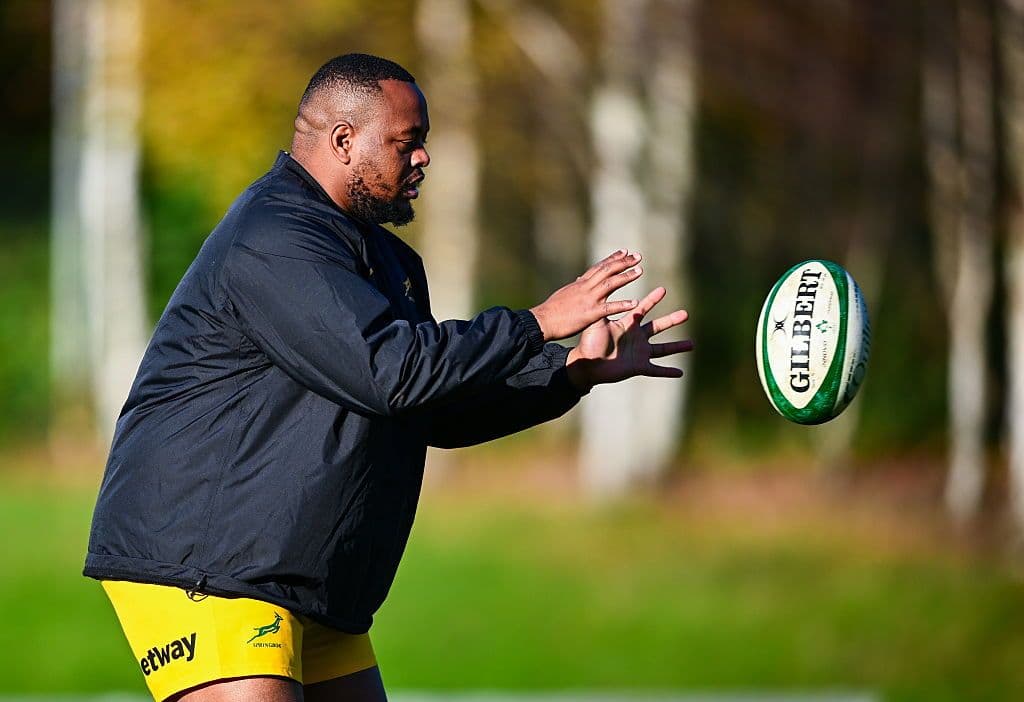
South Africa Squad Training by Shauna Clinton | Getty Images
Khalid Galant, Chief Executive of the South African Institute for Drug Free Sports (SAIDS), banished the unfounded claims around the world that steroid use is somewhat of a culture in South African rugby.
Addressing Rumour
Following the news that Springboks and Lions prop Asenathi Ntlabakanye has been banned for 18 months by the Independent Doping Tribunal Panel (IDHP), there have been a flurry of reports painting South African rugby badly, citing that there is a widespread culture of steroid use.
However, SAIDS CEO Galant banished those claims, clarifying that from school rugby to Springboks level, regular tests are performed to ensure that all athletes are clean.
Galant added that the United Kingdom, New Zealand and Australia’s testing processes are not as prolific as South Africa’s.
“The rumour is that, apparently, steroid use is widespread. But they're not taking into account that South African rugby, from the Springbok level, URC level to the under-21 and schoolboy level - Craven week, it's the most tested sport in South Africa,” Galant told SportsBoom.co.za in an exclusive interview.
“But also, if you look at the UK, New Zealand, Australia, they don't test as deep and as prolific as we do. So that’s what the rumour fails to acknowledge."
“And also, South Africa is world champs in the under-21 and the springbok levels, so when anyone is on top, there's always going to be people who are going to throw stones to knock you off the perch."
“That is no different from the Springboks. That's why these rumours are circulating. And so in the absence of evidence, hardcore evidence, I can't comment on the rumour.”
Ntlabakanye’s Situation
Ntlabakanye tested positive for the Hormone and Metabolic Modulator, Anastrozole, during an out-of-competition test a year ago.
Under South African Anti-Doping Rules, this substance is classified as a “specified substance” and does not warrant a mandatory suspension.
The player also self-declared a prohibited anabolic steroid, DHEA, for which he was charged for both substances on September 9, 2025. The 27-year-old went on to challenge the doping charge and to the IDHP during a two-day hearing that was held in March 2026.
With the 18-month ban having been passed by the IDHP last week, Ntlabakanye is set to miss the 2027 Rugby World Cup in Australia, and will have to forfeit any income and match bonuses he received during the period from May 22 2025, when he was tested.
In an exclusive interview with SportsBoom.co.za, Galant detailed how the process unfolded.
“He was tested in 2025 in an out-of-competition test. I think it was at the Springbok camp. And there he tested positive for a specified substance called anastrozole, which that substance doesn't, it's not a mandatory suspension when we inform the athlete and charge the athlete,” he said.
“But on the day he was tested and filled in the doping control, he also declared DHEA, which is an anabolic steroid, and when you knowingly declare that, that also constitutes a doping violation. So we charged him on two counts for the anastrozole and for the DHEA.
“Because it was a bit of a complicated case in terms of the athlete's defence, you know, he claimed he took it on the substance on the advice of the medical doctors who were in the Lions or rugby system."
“So, we had to get experts; it was some scientific opinions that had to be expressed, and the hearing was only held in March, and it was held over two days. Because it was so intense, obviously, it also took a bit longer for the independent panel to render the decision. So they took into account all the mitigating circumstances that the defence of the athlete put forward."
“But just like in the Maria Sharapova case, the athlete can't claim total innocence by saying, well, I just took it on the advice of my medical team. There is a higher bar that professional athletes still have to clear to really say that I unknowingly took substances that were banned. So that was taken into account."
“The other mitigating circumstance that the panel also put a lot of weight on is the degree of fault, or what we refer to as the degree of fault and negligence. And they obviously didn't attribute the highest degree of fault or negligence; otherwise, you'd have gotten four years."
“And then also, the other factor is the intent, the intention of the athlete, whether the athlete intended to take a banned substance and ask for four months, or was it not intentional. So they also gave weight to that, and that's how they came up with the 18-month suspension.”
To Appeal Or Not
Galant highlighted that they are happy with how the process unfolded. He added that SAIDS will have to go through the ruling by the IDHP and then make a decision whether to appeal or not.
“Throughout the hearings, the athlete did not object to or file any claims to say he's unfairly treated or prejudicially treated. The process was long, but it was to the advantage of the athlete to gather sufficient testimony and witness testimony."
“So, we're happy that the process unfolded the way it did, which is according to the anti-doping rules and the World Anti-Doping Code. So from my end, I mean, we're comfortable with how the process unfolded."
“The panel's decision is independent from us. So that means that we also have the right to appeal the decision. Currently, it's just too early. We just received the decision on Wednesday."
“So we have to study it. And how we study whether we're going to appeal is the way it's written. And there are cross-references to the World Anti-Doping Code and the SA anti-doping rules."
“If the decision can be justified strongly against those, then we will accept the decision. But right now, it's just too early to tell. We haven't had the opportunity yet to really analyse the written decision fully in terms of its cross-referencing to the World Anti-Doping Code.”
The IDHP is a neutral body responsible for ruling on doping violations. It operates independently of sporting organisations. In South Africa, the IDHP panel is appointed by SAIDS.
SAIDS, Ntlabakanye, World Rugby and the World Anti-Doping Agency (WADA) have 21 days to file an appeal against the sanction to the Court of Arbitration for Sport.
Ongama Gcwabe is an experienced sports journalist based in South Africa. His work has been featured in top publications like Independent Newspapers and IOL Sport.