
Betting News
Brazil Has Banned Online Betting So Could South Africa Be Next?
Brazil has banned online betting, raising questions over whether South Africa could follow suit. This analysis examines the regulatory differences, offshore market and tax plans shaping betting policy across Africa.

SportsBoom offers honest and impartial bookmaker reviews to help you make informed choices. While we may earn commissions through affiliate links, our content remains independent and free from promotional influence. For more information, see our Content Transparency and How We Review pages.
Credit: Getty Images
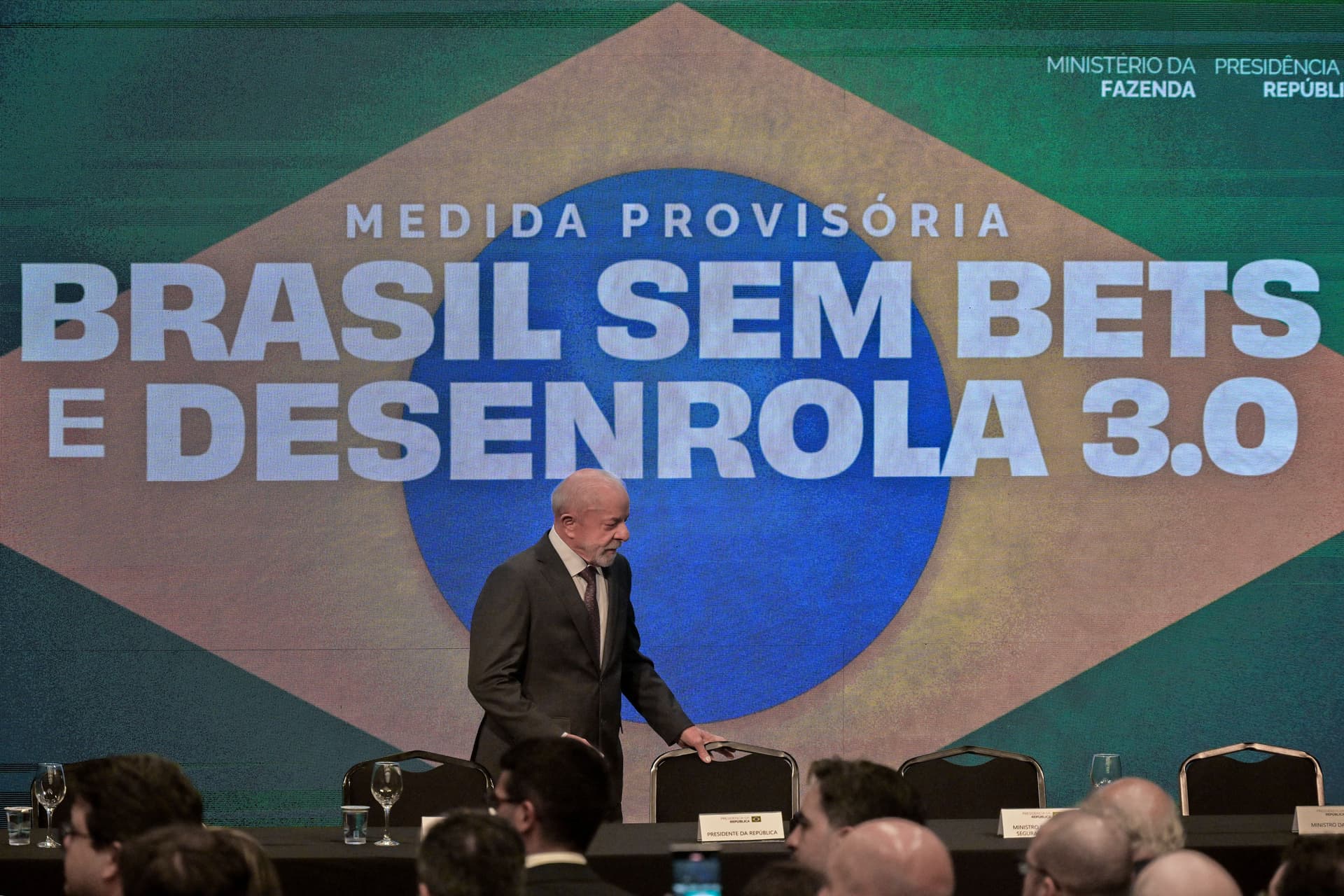
Brazil has shut down its regulated online betting market less than two years after opening it. South Africa faces many of the same pressures, but its laws, its tax plans and its offshore problem make a Brazil-style ban unlikely. Elsewhere in Africa, one country has already gone further.[1]
On 25 September, Brazilian President Luiz Inácio Lula da Silva signed a provisional measure banning fixed-odds betting and online casino games across the country. It ends the operation, offering, intermediation and advertising of betting.[2]
The move has shaken operators and suppliers worldwide. For South African readers, it raises an obvious question. If one of the world's biggest regulated betting markets can be closed overnight, could the same happen here?
What does Brazil's ban actually do?
Provisional Measure 1.394 covers sports betting and online casino games and applies to foreign operators taking bets from people in Brazil. Banks and payment firms can no longer process betting transactions, except to close accounts and refund players.
The shutdown runs to a tight timetable:
| Date | What happens |
| 25 September | Measure published. New bets and new deposits stop immediately |
| 5 October | Last day for bettors to withdraw balances |
| 6 October | App stores and network providers must block betting sites |
| 7 to 8 October | Operators report player balances by taxpayer number (CPF) |

Open bets that are unsettled when sites close will be voided and stakes refunded in full. Winnings on bets already settled must still be paid.
The ban is not yet permanent. It takes effect immediately, but Congress must approve it within 120 days, or it lapses. Congress can also reject or amend it.[3]
The commercial fallout is large. Brazil's Ministry of Finance had granted 85 licences, worth a combined R$2.55 billion in authorisation fees. Pending applications for market entry have also been halted.
Why did Lula do it?
The government's case rests on harm. Brazil's Health Ministry described online betting as a growing public health issue, linked to financial difficulty, anxiety, depression and family conflict. Brazil's central bank estimated last year that Brazilians spend about R$30 billion on bets each month.
The politics matter just as much. Lula signed the order just over a week before the first round of the presidential election on 4 October, in which he is seeking a fourth term. He paired it with a household debt relief programme. The ban is popular: recent surveys suggest roughly three-quarters of Brazilians support a complete ban.
His opponent, Senator Flávio Bolsonaro, called the measure populist, hypocritical and politically motivated. There is also an irony. Lula himself signed the 2023 law that authorised online casino games alongside sports betting.
How has the industry reacted?
The loudest warning is about the black market. Brazil's national betting association, ANJL, said the ban would push more than 30 million bettors onto illegal websites. Kambi chief executive Werner Becher made the same point, arguing that demand does not disappear when licensed operators are removed.
The financial hit is already showing up in guidance:
Flutter expects the ban to cut 2026 revenue by about $70 million and EBITDA by around $20 million.[4]
Entain now expects FY26 online NGR growth of 4% to 6% at constant currency, assuming the ban holds for the rest of 2026.[5]
Allwyn is preparing legal action to protect its five-year Brazilian licence.
Brazilian football is also exposed. Betting firms are the biggest sponsors of the country's clubs, and Flamengo's deal with Betano, worth $46 million, is the largest in South American football history. Lula argues betting accounts for only 7% of club revenues.[6]
Why is South Africa in focus?
South Africa shares many of the pressures that pushed Brazil to act. Betting is booming, and the harm debate is growing louder.
The scale is similar. National Gambling Board figures show R1.5 trillion was wagered in South Africa in 2024/25, up 31.3% on the year before, with betting making up 75% of all gambling activity.[7]
So is the harm argument. The NGB recently warned that food, housing, transport, education and debt must come before gambling. It also noted that 36.4% of South Africans aged 15 to 24 are out of work but are still being targeted by offshore platforms. Treatment capacity is thin: over 4,000 people were referred for treatment in 2024/25, only half started, and 23 completed all ten sessions.
Sport depends on betting money here too. Two brands dominate the online market. Blask data puts Betway and Hollywoodbets well ahead of every other operator it measures. Betway's title sponsorship of the Premiership shows how closely top-flight football is tied to bookmaker money.
Brazil has also been held up as a model before. Three months ago, TechCentral argued that Brazil's earlier crackdown on illegal operators gave South Africa a workable blueprint. That blueprint has now become prohibition.
Could South Africa follow Brazil?
A Brazil-style ban looks unlikely in South Africa, for three main reasons.
- 1
The legal structure is different. In South Africa, online sports betting is legal, while online casino games are not. Bookmakers are licensed by provincial gambling boards, not by one national authority. There is no equivalent of a presidential order that could switch the market off overnight. TechCentral has noted that executive shortcuts like Brazil's would run into section 25 of the Constitution and the Promotion of Administrative Justice Act.
- 2
Policy is heading towards tax and tighter rules, not closure. National Treasury has proposed a 20% national tax on online gambling revenue, on top of provincial taxes of 6% to 9%. Treasury calls it a sin tax, comparable to levies on alcohol and tobacco, and says it would raise over R10 billion a year. Trade Minister Parks Tau has said a new gambling bill is being fast-tracked, with a draft expected before Cabinet later this year. The NGB is also developing advertising rules in parallel. The DA's Remote Gambling Bill, which would license online operators provincially, was approved by the National Assembly in February 2026.
- 3
The offshore market makes a ban self-defeating. The South African Bookmakers' Association estimates illegal online gambling drains more than R50 billion a year, with unlicensed offshore operators accounting for nearly two-thirds of online activity. Closing the licensed market would hand even more of it to those operators. The NGB is still building its site-blocking regime.
That does not mean nothing will change. The more realistic Brazil effect is on advertising and sponsorship. Before the full ban, one bill in Brazil's Congress proposed banning betting ads and sports sponsorship while letting licences expire. The NGB's new partnership with the Advertising Regulatory Board to monitor gambling advertising points in a similar direction.
The politics are also different. In Brazil, a ban became an election pledge. In South Africa, the loudest political critic, Rise Mzansi MP Makashule Gana, backs the 20% tax and tighter regulation rather than prohibition. The industry, through SAROGA, argues Treasury is trying to reshape gambling policy through tax rather than law. Neither side is publicly calling for a ban.
Is anywhere in Africa close to a ban?
One African country has already done it. Ethiopia went further than Brazil, with less international attention.
Ethiopia. The Ethiopian Lottery Service issued a directive banning sports betting companies nationwide, with immediate effect. It followed a multi-agency probe that flagged breaches of licence terms and illicit financial transfers described as a threat to national security. Several betting company owners were arrested, and payment channels were told to stop serving operators.[8]
Uganda. President Yoweri Museveni previously declared that the government would no longer issue or renew licences for sports betting, gaming and gambling companies, citing the effect on young people.[9]
Nigeria. Members of the House of Representatives have previously proposed a complete prohibition of sports betting over mental health concerns. The proposal did not become law, and Nigeria's market has since moved in the other direction, from a national regulator to 36 state regulators.[10]
Kenya. Kenya is the clearest example of the opposite approach. Rather than banning betting, it taxes it heavily. From 1 July 2026, a 20% withholding tax on winnings was reinstated on top of existing levies, and Kenya now bans celebrity and influencer endorsements.[11]
The pattern is telling. Where African bans have happened, they have been driven by financial crime or moral objections, and mainly in smaller markets. Africa's biggest betting markets, South Africa, Nigeria and Kenya, have become reliant on betting tax revenue and are choosing to regulate and tax rather than prohibit.
What should South African bettors watch next?
4 October: the first round of Brazil's presidential election. A Lula defeat could change the ban's prospects in Congress.
6 October: Brazilian licensed sites go offline. Early data on traffic moving to illegal sites will be the first test of the black market warning.
Within 120 days: Brazil's Congress must approve, amend or reject the measure.
Later in 2026: Parks Tau's gambling bill is due before Cabinet, alongside NGB advertising rules. Any tougher advertising or sponsorship proposals will show whether Brazil's move is shaping thinking in Pretoria.

Meet Louis Hobbs, our resident sports guru with a knack for all things darts and snooker. His expertise goes beyond the ordinary, offering deep insights that set him apart. Louis also has a strong passion for US sports, particularly basketball and American football.
References
- 1.Yogonet - Brazil bans online betting as Lula signs measure to end regulated market
- 2.ABC News / AP - Brazil's President Lula bans online betting ahead of presidential election
- 3.World Casino Directory - Brazil Moves to End Online Betting Before October Elections
- 4.NEXT.io - Global industry reacts to Brazilian betting ban
- 5.iGaming Expert - Entain laments ban as Allwyn readies legal action
- 6.France 24 / AFP - Brazil football clubs face massive sponsorship blow from betting ban
- 7.AllAfrica - South Africa: Online Gambling Tax Coming As Government Tries to Slow Betting
- 8.APA News - Ethiopia bans sports betting firms over irregularities
- 9.Techpoint Africa - Online sports betting in Africa: Between morality and an opportunity for revenue generation
- 10.Businessday NG - hese 6 countries banned sports betting, Nigeria to join soon
- 11.The Capital Review (Medium - Online Gambling in Nigeria, Kenya, India and Pakistan
Related Resources to Betting News
- Can South Africa’s New Illegal Gambling Task Team Finally Stop Unlicensed Operators?
- GiG's 888Africa Deal Reveals What Really Matters in African Gambling
- Could Micro-Betting Be the Next Big Advantage for Sportsbooks?
- Are Player Props Becoming a Problem for Sportsbooks?
- Why Gambling Operators Are Raising the Bar for Affiliate Partnerships
- Can Traditional Casinos Survive the Online Gambling Boom? Industry Expert Reveals What Comes Next
- How Live Betting Has Transformed Sports Wagering, According to Industry Insider
- Can Sportsbooks Keep World Cup Bettors Once the Tournament Ends? LiveScore Expert Delivers Verdict
- Are Prediction Markets the Future of Sports Betting? Industry Expert Explains the Threat to Sportsbooks
- Are Free Bets and No Deposit Bonuses Still Worth Claiming?
- Government's 20% Betting Tax Could Boost Illegal Gambling, Warns SABA CEO
- Cluster-Pay Slots vs Payline Slots: Which is Easier?
- Mines vs Aviator: Which Game Is Better?
- Pre-Match Betting Explained: What it is & How it Works
- Why Spina Zonke Stands Out in South Africa
- Why South African Bettors Are Switching Between Betting Apps
- How Well Do Betting Operators Educate New Players
- Expert Warns of Financial, Legal and Data Risks on Unlicensed Online Gambling Platforms
- How to Use Free Spins Wisely at New Casinos
- What Makes South Africa One of Africa’s Most Competitive Betting Markets?