
Betting Academy
Understanding Decimal vs Fractional Betting Odds
For many local punters, the different betting illustrations are simply varying styles. When you see 2.50 odds shown on your betting platform in South Africa and then hear someone say 3/2, stop assuming they are the same thing.

SportsBoom offers honest and impartial bookmaker reviews to help you make informed choices. While we may earn commissions through affiliate links, our content remains independent and free from promotional influence. For more information, see our Content Transparency and How We Review pages.
Decimal vs Fractional Odds Explained
The odds format you use directly affects how you should be seeing value, probability, and potential return. Say you want to back a team at odds of 2.50. You know that your R100 bet will return R250, but what if the odds were shown as 3/2? Let’s unpack this.
What are Decimal and Fractional Odds?
Decimal odds are widely used in the South African context. These displays show your return and your original stake.
For example:
- Odds of 2.50
- R100 bet = R250 (profit + stake)
Fractional odds are more common at UK betting sites, but you still find them in South Africa and they demonstrate the profit relative to your stake.
- Odds of 3/2
- For every R2 staked, you win R3 profit
- A R100 bet returns R250 (same as 2.50)
The numbers are different, probability is unaffected, but the profit display is just slightly different between the two options.
Converting Odds: The Role of Probability Conversion
If you want to compare the odds formats, you need to understand the probability conversion fully.
A simple formula applies:
- Decimal to Probability:
1 ÷ decimal odds - Example:
2.50 to 1 ÷ 2.50 = 0.40 (40%)
This means the bookmaker is implying a 40% chance of that outcome.
For fractional odds:
- Fractional to Probability:
Denominator ÷ (Numerator + Denominator) - Example:
3/2 to 2 ÷ (3 + 2) = 0.40 (40%)
So, whether you see 2.50 or 3/2, the implied probability remains identical. The difference is purely presentation.
Why Bettors Prefer One Format Over Another
The reality is that the decimal odds format dominates the South African market because they simplify the payout calculation.
For example:
- EPL bet at 3.20 → R50 stake = R160 return
This is especially valuable for casual bettors who are placing smaller stakes sporadically.
Fractional odds can make profit margins far more visible. Experienced bettors might appreciate that this helps them see value and be easily informed about the possible outcome.
Where Misunderstanding Happens
The issue will never be the format but rather the interpretation. The truth is that higher odds mean implied probability, not guaranteed outcomes.
For example:
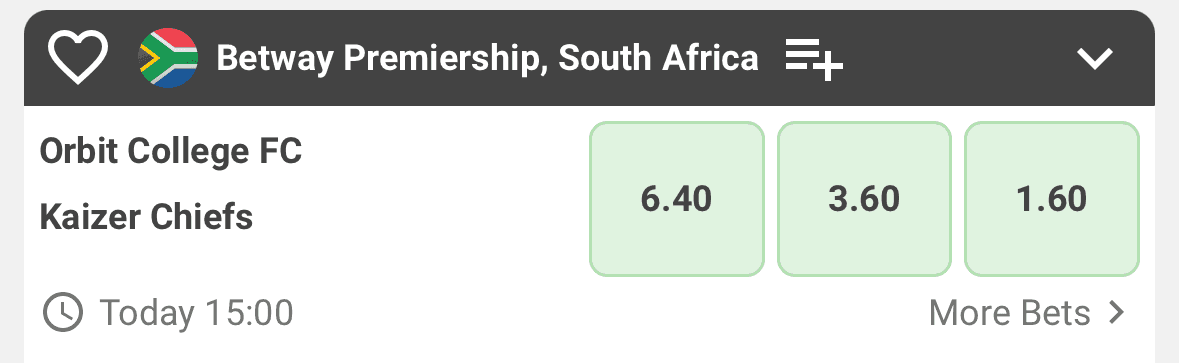
- Odds of 6.40 on Orbit College beating Chiefs suggest just 15.63% implied probability
Where Misunderstanding Happens
If a punter were to simply back the Orbit College win since the odds are higher, they may be ignoring the likelihood of success.
The Concept of Mathematical Edge
The idea of a mathematical edge comes from punters comparing the estimated probability of an outcome with the bookmaker's implied probability.
The Concept of Mathematical Edge
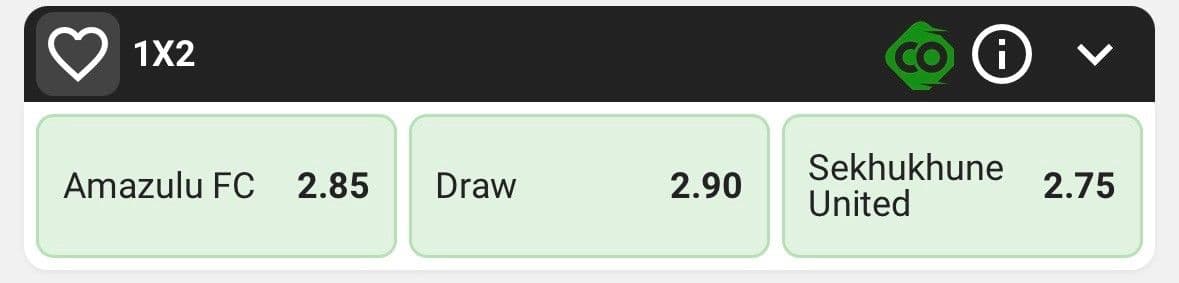
Consider the example of the PSL encounter between AmaZulu and Sekhukhune United (06/04/2026). The hosts have an implied 35%-win probability. If you believe they should be closer to 50%, the theory suggests there is value to be found here. Of course, this relies totally on the assessment being accurate.
So, while the concept of a mathematical edge is valid in probability terms, applying it consistently in real-world betting is complex and uncertain.
Real World Example: Durban City vs Mamelodi Sundowns (PSL)
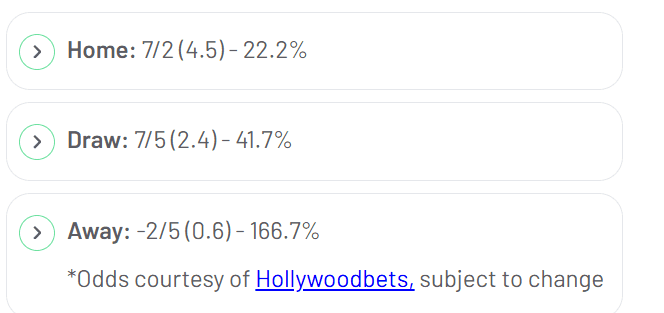
If we look at the upcoming PSL encounter between Durban City and Mamelodi Sundowns (07/04/2026) previewed by one of our writers, take a look at the advertised odds available on the encounter.
Real World Example
If you place a bet of R100 on Durban City, you will see a return of R450; the implied probability sits at just 22%. Your key takeaways here should simply be that the bookmaker prices up Durban City as the underdogs coming into the encounter. Your decision to back them to win should be based on whether you agree with that probability – not the format displayed.
How Odds Format Affects Your Betting Decisions
Decimal odds are best for quick calculations and mobile betting, while fractional displays are better for understanding profit and loss ratios.
However, neither format changes:
- The actual probability of an event
- The bookmaker’s margin
- Your long-term risk exposure
Focusing too much on format can distract from what really matters, which is interpreting the numbers correctly.
Conclusion: Focus on Meaning, Not Format
Understanding fractional vs decimal odds is less about choosing the “better” format and more about interpreting what the numbers represent.
As I have said, modern punters, especially in the South African context, prefer the simplicity intrinsic to the decimal odds display.
For me, though, the more important skill is recognising implied probability and questioning whether it aligns with your own assessment.

Ryan Liberty is a sportswriter known for his conversational style and ability to make content feel both engaging and easy to follow. With a genuine passion for sport, his work is driven by a love for football, horseracing, Formula One, and tennis, among others, allowing him to cover a wide range of topics with confidence.
Related Resources to Betting Academy
- Why 1000 Slot Spins Beat a Football Match in Predictability
- House Edge vs Betting Margin: What’s Fairer for Punters?
- Why Long Multiples Appeal to South African Bettors
- How to Use Casino Games to Keep Your Bankroll Active for the 2026 World Cup
- When to Cash Out a Bet Early? A Guide for Football Fans
- How Injuries Shift Betting Odds and Move the Line
- FICA for Beginners: Getting Your Account Ready Before Kick-Off
- Top Soccer-Themed Spina Zonke Games to Play in the Off-Season
- Are PSL Gambling Sponsors Legal in South Africa?
- Why R5 Aviator Bets Are Trending in Sports Bars
- How Release Clauses Affect Transfer Odds
- What to Bet On During Soccer’s Off-Season in South Africa
- How Fake Transfer Rumours Affect Betting Odds and Price Drift
- Transfer Betting Explained: How Medicals Affect Odds & Market Value
- Why Transfer Rumours Shift Betting Odds Quickly
- What Is Single Betting How It Works with Strategy Tips in 2026
- Treble Bets Explained How 3 Leg Accumulators Work in 2026
- Why Transfer Odds Move Before the News?
- How to Hedge Football Transfer Rumours Using Free Bets?
- Asian Handicap Betting Explained: Expert Strategies & Proven Winning Tips