
Betting Academy
Last Goalscorer Betting Explained: How It Works & Odds Guide
The best way to show the impact of this betting market – even among expert betting tips and predictions - is to look at a recent Betway Premiership example. Orlando Pirates and Kaizer Chiefs met in the Soweto Derby and given the attacking threat of Pirates, one might have picked Relebohile Ratomo as the last goalscorer given his efficiency in front of goal.

SportsBoom offers honest and impartial bookmaker reviews to help you make informed choices. While we may earn commissions through affiliate links, our content remains independent and free from promotional influence. For more information, see our Content Transparency and How We Review pages.

Last Goalscorer Betting Explained!
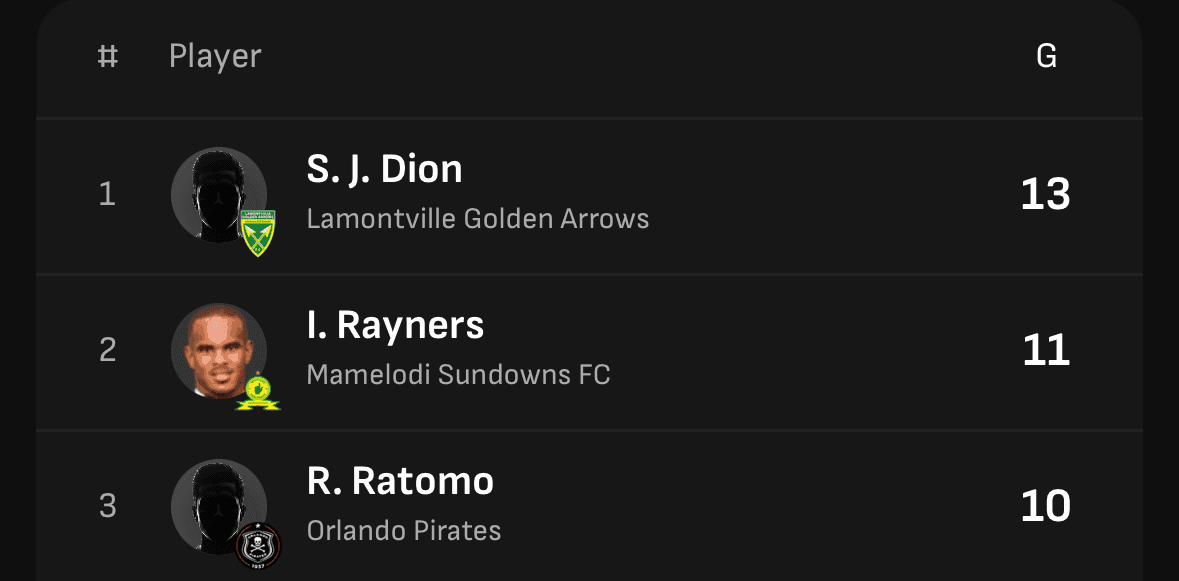
Dion is leading for now, but Rayners and Ratomo are close, the race isn’t over yet
The issue is that the game became rather cagey and while Pirates were the last team to score on the day, they needed the help of their left-back to find the back of the net. The result is that the bet loses here.
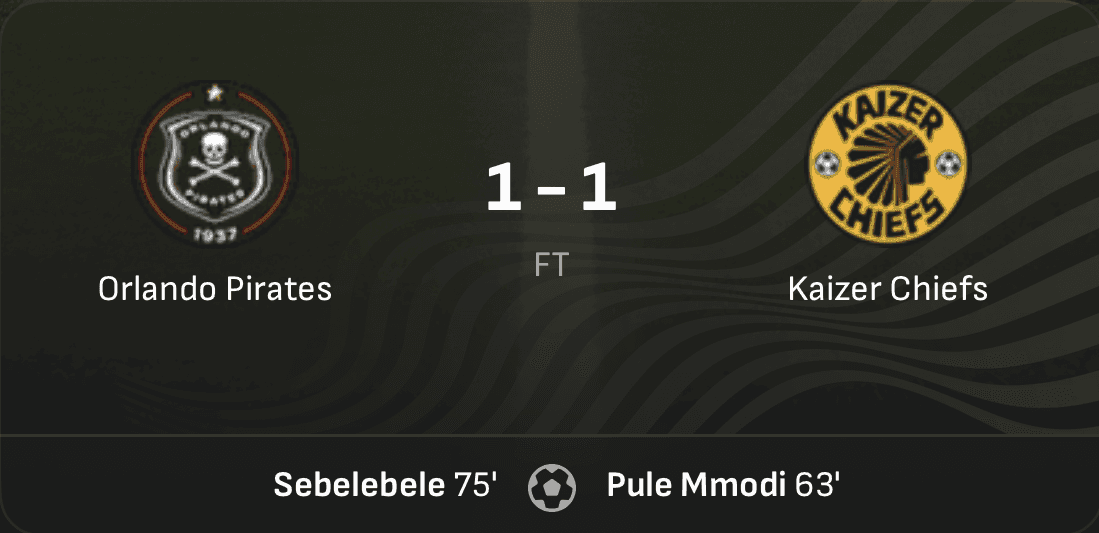
Final score Orlando Pirates and Kaizer Chiefs settle for a 1-1 draw in the Soweto Derby, with goals from Pule Mmodi and Sebelebele
The key takeaway is simple but often overlooked: last goalscorer betting is not just about who scores — it’s about when the final goal happens and who is still on the pitch. If you’re exploring this market on recommended sports betting operators, understanding that distinction is essential before placing a single wager.
What Is Last Goalscorer Betting?
At its core, this is a betting market where you select the player who will score the final goal in regular time of a particular football match.
This establishes two conditions which need to be met:
- The player must score
- That goal must be the last goal of the match
That final goal can occur at any stage — early or late — but in practice, it is often influenced by late-game dynamics.
How Last Goalscorer Betting Works
You simply pick a player and place a wager on them to score the final goal.
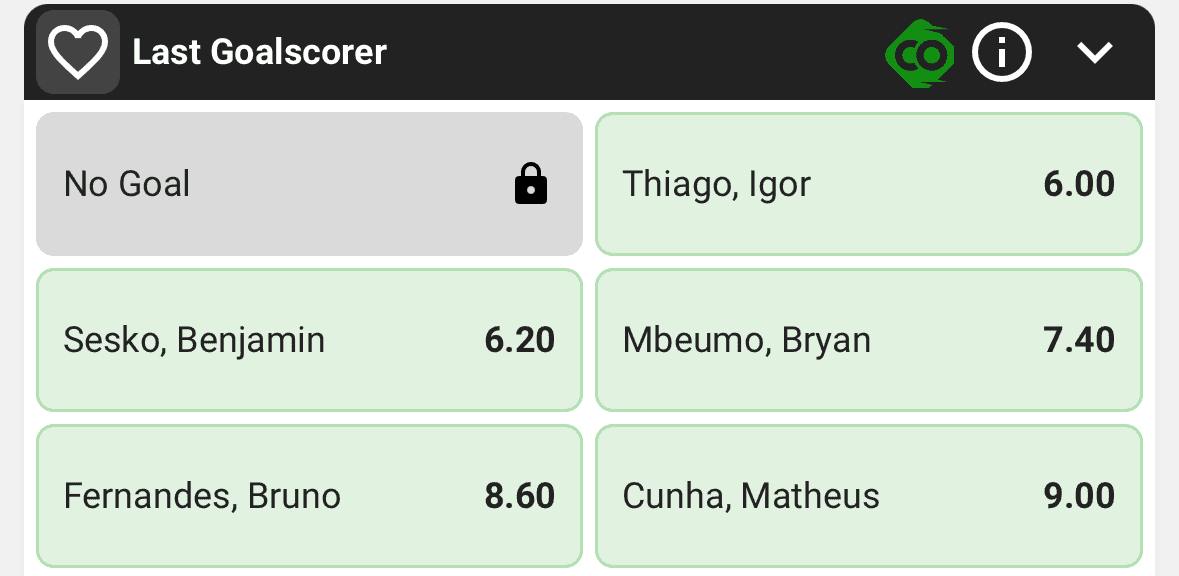
How Last Goalscorer Betting Works!
For example, in the game between Manchester United and Brentford (Premier League, 27/04) we place R100 on Matheus Cunha to be the last goalscorer. The potential return is R900.
If he scores the final goal of the match, the bet wins. If another goal is scored afterward by any player, the bet loses—even if your selection already scored.
Data from Opta shows that a significant share of goals in professional football are scored in the final 15 minutes (75’–90’+), which often becomes the decisive window for last goalscorer outcomes.
How Bookmakers Set Last Goalscorer Odds:
There are various inputs which guide the bookmaker’s establishment of the odds, these include:
- Player scoring rates (goals per 90)
- Expected minutes played
- Substitution likelihood
- Team attacking strength
- Match competitiveness
South African Context
Points worth considering in the South African context for licensed football betting platforms:
- PSL matches often involve earlier substitutions compared to European leagues
- CAF competitions introduce higher tactical variability and game-state swings
This increases uncertainty around who remains on the pitch when the final goal is scored.
Why Timing Matters in Last Goalscorer Markets
In this betting market, a player’s scoring ability alone is not enough. The reason for this is the fact that the market is shaped by:
- Early scorers are often substituted
- Late goals are frequently scored by fresh players or midfield runners
Being on the pitch late is often more important than being the most likely scorer overall.
Role of Substitutions and Game State
The biggest risk factor in this betting market by far is the role of possible substitutions. A few recurring scenarios punters should consider include:
- Leading teams replace forwards with defensive players
- Coaches manage player fatigue by removing key attackers
- Trailing teams introduce attacking substitutes late
Balancing the best scoring probability with the best timing probability is the key to success here.
Why Last Goalscorer Betting Works (and Where It Fails)
Role-Based Probability
Strikers with positive numbers in this category are those with high:
- Shot volume
- Penalty responsibilities
- Central positioning
Timing Risk
Even if your pick enjoys a high-probability value, the bet will likely lose if:
- They are frequently substituted
- Their team protects a lead
- Match tempo drops late
Pros and Cons
Pros
Higher odds than anytime scorer markets
Can offer value in matches with expected late pressure
Cons
High substitution risk
Strong dependence on unpredictable match flow
Low predictability in tight or defensive matches
Last Goalscorer vs Other Markets
vs Anytime Goalscorer
- Anytime: player scores at any point
- Last: player must score the final goal only
vs First Goalscorer
- First: depends on early match dynamics as well as team dynamics
- Last: depends on full match progression and a team’s likely response to a particular situation
vs Team Totals
- Team totals measure goal volume
- Last goalscorer isolates a single timing event
This is one of the highest variance markets in football betting because it depends on both scoring probability and sequence timing.
Understanding Last Goalscorer Odds
On every platform, the story is the same. The odds ultimately reflect:
- Player scoring probability
- Likelihood of being on the pitch late
- Match goal distribution
Even if a player has a 40% chance to score, their last goalscorer probability may be lower due to substitution risk and timing uncertainty.
Drivers of Value in Last Goalscorer Betting
There is never a perfect science to this, but there are certain conditions that will always improve the potential success of the wager.
Players likely to play the full 90 minutes
Penalty takers (retain scoring upside late)
Teams that maintain attacking pressure late
Matches with higher expected goal output
Risk and Bankroll Management
As we have said before, this is a high variance betting market. Losing streaks are often most common due to:
- Timing randomness
- Substitution effects
- Match volatility
When Last Goalscorer Works
You can increase your level of predictability. Aspects which point to an increase of predictability include:
One team is expected to dominate
The starting XI is stable
Substitution patterns are consistent
Multiple goals are likely
When to Avoid Last Goalscorer
From a betting perspective, I advise you to avoid this betting market when:
- Matches are likely low scoring (e.g., under 2.5 goals profiles)
- Teams rotate heavily (common in CAF fixtures)
- Tactical setups are defensive
- Substitution patterns are unpredictable
Common Mistakes
- Assuming top scorer = last scorer
- Ignoring substitution patterns
- Ignoring match state (leading vs chasing)
- Overvaluing star players regardless of minutes played
Naturally, this isn’t an absolute list, but these are the most popular pitfalls players must contend with to ensure they give themselves a chance at success. It is worth noting that even a high-profile striker substituted early has zero chance of scoring the final goal.
Last Goalscorer Checklist
Before placing a bet, I always suggest you systematically go through this betting checklist.
- Will the player likely play the full match?
- Is the match likely to produce multiple goals?
- Is the team strong in late-game situations?
- Is substitution risk low?
If there are multiple points that remain uncertain, the risk of your bet is significantly higher, and so the suggestion might be to stay clear.
Conclusion
This is a betting market that remains one of the most complex player markets for South African punters to navigate. It combines:
- Scoring probability
- Match flow
- Substitution timing
- Game-state dynamics
Our final takeaway is simple: Using licensed sportsbooks and approaching this market with small stakes and realistic expectations is essential.
FAQs
What is Last Goalscorer betting?
It involves betting on the player who scores the final goal in a match.
How is it different from Anytime Scorer?
Anytime scorer requires a goal at any point. Last goalscorer requires the final goal only.
Why is it so unpredictable?
Because outcomes depend on timing, substitutions, and match flow—not just scoring ability.
Do substitutions affect outcomes?
Yes. A substituted player cannot score the final goal, regardless of earlier performance.
Can this market be profitable long-term?
It may offer value in specific scenarios, but high variance and timing uncertainty make consistent outcomes difficult to achieve.

Ryan Liberty is a sportswriter known for his conversational style and ability to make content feel both engaging and easy to follow. With a genuine passion for sport, his work is driven by a love for football, horseracing, Formula One, and tennis, among others, allowing him to cover a wide range of topics with confidence.
Related Resources to Betting Academy
- Avoid Withdrawal Problems at SA Betting Sites
- Why Most South Africans Take Cover Bets
- South Africa Weighs 20% Tax on Online Gambling Revenue
- Online Betting Boom Reshapes South Africa’s Gambling Market
- Can Betting Work as a Side Income in South Africa?
- Does Betting in South Africa Add More Fun to Football Matches?
- Sports Betting vs Casinos: What South Africans Prefer
- Anytime Goalscorer: Everything You Need To Know About This Bet Type
- How to Delete Settled Bets in Betway
- Most Popular Sports for Betting in South Africa
- Why FICA Delays Are Still a Huge Problem for South African Bettors
- Banker Betting Explained: Strategy, Tips & How to Pick Safe Bets
- Understanding RTP in Spina Zonke: Stop Misreading “Value” in Casino Games
- Adding One More Leg to Your Multi?
- Implied Probability: How to Read Transfer Odds Easily
- Why Aviator Appeals to Sports Bettors
- Responsible Gambling in South Africa: How to Set Betting Limits
- Loss Aversion: Why Broken Accas Hurt More Than Wins
- PSL Betting Guide: Ignore Streaks, Focus on Data
- Why Bettors Prefer Fast Games Over 90-Minute Matches